Showing posts with label sexual abuse. Show all posts

Tuesday, December 13, 2016

Coming of Age Novel with a Dark Side

COMING OF AGE


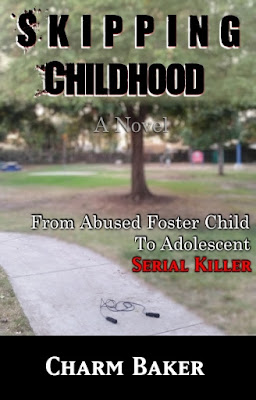
A popular form of fiction are coming of age stories; oftentimes due to the similarities we all seem to share when growing up.  Some readers look for things they can relate to when reading about someone else’s upbringing.  But there are also readers who like getting a glimpse into someone’s life that was completely different from their own.  Typically, coming of age books focus more on the journey and the path of the main character as well as their successes and failures along the way.  But sometimes certain events in a character’s life will manage to overshadow their overall journey.  When this happens, you end up with a novel like Skipping Childhood:  A Novel (From Abused Foster Child to Adolescent Serial Killer).


A Dark Side
Skipping Childhood is an urban novel that can be classified into a number of different genres.  The book definitely qualifies as a coming of age story because it spans from the main character’s birth (Deandra Baxter), up until she becomes an adult.  But this particular coming of age story has a serious dark side.  Events begin to unfold with more and more momentum.  Once Deandra resorts to murder as a solution to handling her problems, the suspense starts to mount.  This element to the book makes the title worthy of qualifying in Amazon’s Kindle Store:  Mystery, Thriller & Suspense category.

Hopefully, these two categories won’t somehow end up canceling each other out.  The two categories may seem like an odd partnership, depending on what a person wants to read.  The same can be said about the topic of sexual and physical child abuse.  Such subject matter might be more expected in a coming of age story, but perhaps not so much with a thrilling suspense story.  Yet, despite not necessarily being what readers might typically expect, Skipping Childhood:  A Novel has:

  • All the ups and downs of a coming of age story
  • All the tears and pain of an abuse story
  • And all the excitement and anxiety of a suspense story


Pick up a copy today, and see for yourself what a surprisingly enjoyable blend this book is.


Monday, December 12, 2016

Survival Stories: The Truth in Fiction

ABUSE AND SURVIVAL


I wrote a recent post about children who kill and how most of the books in this category are actually works of non-fiction.  The sad reality is; when dealing with a subject such as abuse and survival, the same thing is true.  I found so many heart-wrenching (non-fiction) stories out there about children who were abused and had to learn how to survive.  Interesting enough, some of those book topics actually end up overlapping; that is to say, some of those books about children who kill are also about children who were abused. 


This is of special interest to me, having written a work of fiction about a child abuse victim who resorts to killing.  Skipping Childhood:  A Novel (From Abused Foster Child to Adolescent Serial Killer) has many of the very same elements that those non-fiction books have.  The reason for this is because Skipping Childhood is a true story of survival, even though many elements of the novel is fiction.  We have all discovered by now that it is not unusual to find truth in fiction, especially when it comes to survival stories. 

In the publishing industry, when a book is based on a true story, presumably, the events that take place are true.  My book has an overwhelming amount of content that is inspired by true events, which is not necessarily the same thing.  While I never knew any 12 year-olds who killed anyone, I’ve known many, if not all of the characters in my book.  I’ve known their lives and their struggles and their challenges, and many of them, I’ve experienced first-hand.  So as an author, I’m able to write about abuse and survival with a sense of credibility, even if I use my imagination when writing about murder.

Difficult to Write and Read
Clearly, some topics are much more difficult to write and even to read.  I came across two books yesterday that I wanted to mention.  Both are based on true stories about child abuse and survival.  No More Pain Kindle Edition is written by Paige Green.  This is one that I purchased and plan to read.  I’ll also be posting a review when I’m done.   

http://amzn.to/2huoRgA             http://amzn.to/2huve3C

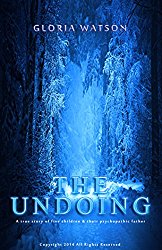
The other book I came across is The Undoing: The uncertain nights of the Peterson children Kindle Edition by Gloria Watson.  This one I won’t be reading, and I mean no disrespect to the author.  One of the statements made in the book description is that this book is “not for the faint of heart”.  That rules me out.  I found it hard to even read the description of what both books were about, let alone to dive into something I know will be disturbing. 

The reason I chose to buy No More Pain is because the author did a good job of making me feel saddened by the topic, but curious to see what happens.  I know the content is delicate, but I don’t get put off in the way the author leads me to believe it will be presented.  I think this is an important aspect when writing about child abuse and survival, whether you write fiction or non-fiction.  I appreciate the candor and foresight Ms. Watson (author of the second book) showed.  She gave us a warning about her book and certain readers need to recognize that her warning is for them (like me).  This helps eliminate the chance of reading a book and giving it a poor review because your conscious was offended or it was too graphic to handle.

Writers who are not sensitive to this issue can find themselves being viewed in a questionable way.  I came across one title about a sexually abused child, and the description almost read like one of the erotica books I’ve reviewed in the past.  There should be no blurred lines when it comes to writing about sexual child abuse and writing about an adult sexual encounter.  The language, tone, and everything else should be distinctively different.  Failing to recognize this fact will put off a lot of readers, as well it should.

Less is More
The expression “less is more” has never been more fitting than in the above conversation.  I think authors should apply it when writing the necessary scenes and dialogue in stories about abuse and survival (fiction or non-fiction).  Readers who want to read and understand these types of tragic stories don’t necessarily feel the need for all the gritty details and language surrounding violent and sexual acts.  I personally tried to keep this point in mind when I wrote Skipping Childhood.  The topic is sensitive enough without adding all the shock value of horrific scenes and dialogue.

I welcome you to read Skipping Childhood:  A Novel (From Abused Foster Child to Adolescent Serial Killer) and see what you think about this point.


Tuesday, December 6, 2016

Showing Support and Solidarity for Fellow Authors

SOLIDARITY

The Skipping Childhood Ramblings blog was created specifically as a platform to discuss various elements of my new urban suspense novel.  In order to help me follow through with providing consistent posts, I told myself two things before I started out.  The first thing I did was accept the fact that I’m lousy when it comes to trying to operate a “daily” blog so I told myself this will not be a daily blog.  I even mentioned in an earlier post how this has actually helped me to write more, not less.  You can read about this by clicking the:  ACCEPTANCE” category link in the column.


The other thing I decided to do in order to focus more on the content and continuity of my blogging was to stop worrying about links.  Of course, my objective is to provide links to the novel’s “Amazon product page” at every opportunity that I can, but I hadn’t planned on linking other products.  Initially, the various books that you see on this blog did not contain links, merely the images and titles. 

Support and Solidarity
In the past, I’ve found that concentrating too much on trying to monetize your blog can interfere with actually providing content.  I don’t want that to be the case with this blog, so my thoughts were to omit links.  But then I thought about the whole ideal of providing support and offering solidarity for authors who dare to write about these difficult subjects.  Whether you are a fiction writer or a non-fiction writer; it is hard addressing difficult topics about children, especially like:
child abuse, physical abuse, sexual abuse, things no one wants to talk about.  I believe that to the extent we can help our fellow authors, we should; especially when their content, and products are so relevant to what we write ourselves.

So I started an Amazon Affiliate account, specifically to help get other authors promoted, book purchases, and possibly some reviews.  If you would like to help support other authors who are finding creative ways to heal and close old wounds, be sure to take advantage of the book links you find on this page.  Solidarity is important so show it whenever and where ever you can.

DON'T MISS THIS:
Have you got a chance to check out the new book trailer for "Skipping Childhood:  A Novel" yet?  You can click the link in this paragraph and view it on YouTube or simply click the main "BOOK TRAILER" link at the top of the page.  That way you can watch it right here on the blog, then continue reading when you're done.  ENJOY!

http://amzn.to/2giOLmx

Friday, December 2, 2016

Survivors: Finding Ways to Assert Your Power

EMPOWERMENT


Most people don’t usually think about how much power they do or don’t have in their lives, especially if you’re just a kid.  Everything in your life is pretty much a given; that is, until you’re actually forced to confront the issue of how much or how little power you have over your own life.  While I can’t speak for all victims who have suffered some form of sexual abuse, I can speak for at least one for sure.  I’ve also compared that “one” view with others who often feel the same way.  What way is that?  That you’ll do anything to get it back, once the power over your own body has been intimidated, coerced, taken, or stolen away from you.  Seeking ways to empower yourself after being a victim is not only typical, but natural, as in human nature.

Empowerment   
I recently read one of the survivor’s posts on their abusesurvivorblog.com site.  I was literally blown away at the strength and candor this individual displayed in her writing and sharing her truth.  Some readers (particularly those who have never experienced this type of loss of power) may not understand Sarah’s actions. 

Here is a brief blog excerpt:  {abusesurvivorblog.com}
The adult industry has been what has allowed me to take these past 2 years to heal. There is still a huge stigma about the adult industry. Without it I would be living in poverty. Will I ever be able to be hired at a regular job after being in the adult industry for over 10 years? Nope, probably not. That’s ok, I don’t want to work for other people anyway. One of the amazing things I’ve learned is that I can make my own way. I get to be my true self, no matter what that self is that day. I get to live many lives and explore myself, the artist inside of me, my sexuality. ALL THE THINGS I want are open and waiting for me to experience, to have, to live. I will thrive.

Some readers may be wondering how she could possibly feel a *sense of empowerment by performing sexually related activities.  Perhaps even some actual survivor victims are wondering this, but probably not as many as you might imagine.  As a survivor, I COMPLETELY understand where Sarah is coming from, and I can totally relate to how she described her feelings.  I’m considerably older than Sarah (she’s only 23) and I’ve had a lot more years to outgrow her particular viewpoint, but once upon a time, I was exactly where she is now – I even lived in Las Vegas.  I applaud this young lady for being brave enough to share her truth and I wish her the best in all her endeavors.  I also hope to have her do a guest blog interview on this blog, somewhere in the near future.

All Survivors are Different
While every survivor’s story is different in its own right, still, in a lot of ways, we are all the same.  That’s why it is important to read information like you find here, and determine what best applies to you.  When you can find something that you benefit from – great!  If you find that something is not applicable or helpful to you, ignore it.  This blog, and other formats like it are only meant to provide an open dialogue and pave the way for other survivors.  Hopefully readers can acknowledge and possibly share their own truths.  That is how you get on the road to becoming survivors and not just staying victims.

Some websites and organizations encourage getting therapy and while that might be a good idea, not everyone is willing or even in a good place (mentally) to do that.  Many individuals are still trying to find ways to deal with child abuse triggers that may be hindering their lives even if the abuse was years ago.  Being afraid of conventional therapy is no reason not to seek out some kind of help.  Try to recognize that therapy can come in different ways.  For instance, writing is therapeutic and you can do this in a non-fiction way like the author of the book “Rescued Soul”, or you can hide behind fiction (like me) and share your truth in that way.


Help is Needed
According to the organization called:  Changing Minds Now, “New research shows that witnessing traumatic events…can impact the physical development of a child’s brain — potentially leading to lifelong health and social issues.”  This research was based on children who only witness violence and abuse second-hand.  How much more so is a child’s future and adulthood at stake when they’re the actual victim of abuse?

Getting help for adult victims of child abuse is just as important as the need to get help during the time that the abuse is occurring.  Laws and legalities have “statutes of limitations” not people.  For those who refuse to get some kind of healing, you will NEVER find closure.  There are tons of groups, both online and off, local and nationally, who are devoted to helping “…support those affected by domestic and sexual violence… to empower women and children…”


Rainn is a charity that is the largest anti-sexual violence organization around.  They're available to help with their National Sexual Assault Hotline | 1.800.656.HOPE(4673) | Free. Confidential. 24/7.


* Book Related Connection (Character Analysis: Julie)
When it comes to the above survivor’s idea of a “sense of empowerment,” there is one particular character in the book that demonstrates this same ideology.  “Julie” is a foster sister to the main character (Deandra) and she is also being stalked (more or less) by their foster father predator.  In one instance, Julie makes a comment that suddenly turns a light bulb on in Deandra’s head about her confusing promiscuous behavior.

Here’s the book excerpt:
Hearing those words caused tears to pour down Deandra’s face, but she was quiet so Julie wouldn’t know she was crying.  Suddenly Julie’s promiscuous and flirty behavior made more sense.  It used to confuse Deandra how sometimes Julie even behaved that way towards Leonard.  If she wasn’t complaining about what a “creep” he really was, she’d pretend that all his staring and gawking didn’t matter one way or the other.   Now Deandra knew for sure that Julie’s “I don’t care” and “it don’t bother me” attitude was just another performance.  Denial and rebellion were both defense mechanisms she used to help deal with the bad things happening in her life.  Acting flirtatious helped Julie feel like she was in control instead of being controlled.  Now Deandra understood; this was Julie’s way of regaining her power, just like Deandra had her own way of trying to do the same thing.    

https://www.amazon.com/Skipping-Childhood-Abused-Foster-Adolescent-ebook/dp/B01M5JCGKG/ref=sr_1_1?s=books&ie=UTF8&qid=1479863155&sr=1-1&keywords=skipping+childhood+charm+baker