Saturday, December 10, 2016

Serial Killer Fascination: The Stuff We Like to Watch and Read

SERIAL KILLER


When you look at the type of television programs referred to as “murder porn” you end up seeing stories about all kinds of serial killers.  There is no doubt that there is a certain serial killer fascination when it comes to the stuff we like to watch and read.  I have to admit, it is a topic that I personally find interesting, although I’m not a big fan of unnecessary blood and gore.  When it comes to serial killer movies and books, I think the most intriguing aspect to me is the whole psychological part of it all.

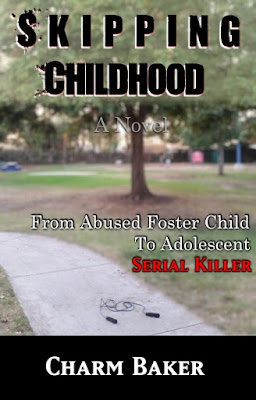
My book:  Skipping Childhood:  A Novel (From Abused Foster Child to Adolescent Serial Killer) was always meant to be a story about a juvenile serial killer.  I say so right in the title, but even as I wrote the book, I knew Deandra Baxter wasn’t the typical serial killer you see in the movies or read about in your favorite books.  Now that the book has been released, I’ve had to pay attention to how exactly to market the book.  This has helped me understand just how different my particular serial killer character really is.  It seems that I’ve managed to write a book that has such an overwhelming sub theme, it nearly overshadows the main theme; a kid who commits multiple murders.

http://amzn.to/2giOLmx

Using this blog as a platform to talk about the novel has helped me realize how many important issues my book touches on, with respect to child abuse.  Even though the book is a work of fiction, the blog still provides readers with a creative way to dialogue about a difficult topic.  My focus here is not merely on the book and gaining book sales and reviews.  It is to continue providing and receiving enlightenment on this delicate subject, from a survivor’s perspective.

I’ve asked myself should I promote and market my main character as an actual serial killer.  Her story will probably gain sympathy from the reader, in spite of her killings, but the reality is; considering the number of deaths that take place in the story, and the manner in which they occur, Deandra Baxter definitely qualifies as a serial killer.  Read the book and decide for yourself how you choose to view her.

Tuesday, December 6, 2016

Showing Support and Solidarity for Fellow Authors

SOLIDARITY

The Skipping Childhood Ramblings blog was created specifically as a platform to discuss various elements of my new urban suspense novel.  In order to help me follow through with providing consistent posts, I told myself two things before I started out.  The first thing I did was accept the fact that I’m lousy when it comes to trying to operate a “daily” blog so I told myself this will not be a daily blog.  I even mentioned in an earlier post how this has actually helped me to write more, not less.  You can read about this by clicking the:  “ACCEPTANCE” category link in the column.


The other thing I decided to do in order to focus more on the content and continuity of my blogging was to stop worrying about links.  Of course, my objective is to provide links to the novel’s “Amazon product page” at every opportunity that I can, but I hadn’t planned on linking other products.  Initially, the various books that you see on this blog did not contain links, merely the images and titles. 

Support and Solidarity
In the past, I’ve found that concentrating too much on trying to monetize your blog can interfere with actually providing content.  I don’t want that to be the case with this blog, so my thoughts were to omit links.  But then I thought about the whole ideal of providing support and offering solidarity for authors who dare to write about these difficult subjects.  Whether you are a fiction writer or a non-fiction writer; it is hard addressing difficult topics about children, especially like:
child abuse, physical abuse, sexual abuse, things no one wants to talk about.  I believe that to the extent we can help our fellow authors, we should; especially when their content, and products are so relevant to what we write ourselves.

So I started an Amazon Affiliate account, specifically to help get other authors promoted, book purchases, and possibly some reviews.  If you would like to help support other authors who are finding creative ways to heal and close old wounds, be sure to take advantage of the book links you find on this page.  Solidarity is important so show it whenever and where ever you can.

DON'T MISS THIS:
Have you got a chance to check out the new book trailer for "Skipping Childhood:  A Novel" yet?  You can click the link in this paragraph and view it on YouTube or simply click the main "BOOK TRAILER" link at the top of the page.  That way you can watch it right here on the blog, then continue reading when you're done.  ENJOY!

http://amzn.to/2giOLmx

Sunday, December 4, 2016

Adult “Child Abuse” Survivors: What to Do When You Want to Kill Your Abuser


 CLOSURE

Victims of sexual and physical child abuse rarely grow up to be well-adjusted adults and model citizens of the community; at least not without some kind of CLOSURE.

When you think about it, what else could you expect from a child when life has managed to stunt their growth and interfere with the normal course of development?  That is why it is so important for survivors of abuse to find some kind of productive way to purge themselves of bad memories and actions associated with those memories.  Finding just the right outlet can be difficult for many people.


In my novel, Skipping Childhood:  A Novel (From Abused Foster Child to Adolescent Serial Killer) it may seem like my main character, Deandra Baxter is a little extreme in her actions, but that’s because this is fiction.  After all, it is both illegal and immoral for a person to commit pre-meditated, coldblooded murder, even under seemingly justifiable conditions.  In real life, survivors DO NOT kill their abusers, but does that mean they can never find closure?  They can if they find something productive that works for them and helps them work their way through it.  Many former victims of abuse have found all kinds of creative outlets that enable them to give voice to their pain and suffering.  Being able to do this is liberating and both empowering at the same time.  I have experienced this first-hand with the writing and the completion of Skipping Childhood.

Writing is Therapeutic
Writing can be a very therapeutic thing, even if you’re only writing for yourself and don’t plan to let anyone else read it.  In fact, that can be the most liberating type of writing of all.  I discovered this many many years ago, even before I started writing professionally.  But I never knew just how therapeutic until I dove into this particular work of fiction.  Having put so much of my own life into the writing, forced me to confront a host of feelings and emotions I thought were long since buried, or I never knew existed.  I read something recently from another survivor and they said something similar.  In fact they went on to say how during the course of writing their own memoir, they got so emotional, they had to stop for a month or two, before resuming.  I experienced the same thing with Skipping Childhood.  

Find Your Outlet
If you’re reading this information right now and you haven’t sought some kind of help for your past abuse, it is high time you find a productive outlet.  Don’t underestimate the power of being able to release what’s inside in a productive way.  I continue to emphasize the word “productive”, because if you’re not careful, you’ll be forced to find a release valve, and it may not be a good outlet.  Start thinking about your own creativity and how you can use it as an outlet for good.  Here are a few ideas to start.

Writing | Poetry | Music | Painting | Drawing | Photography | Acting | Spoken Word    

Deandra Baxter (Character Analysis)
I realize now, and maybe all along, that I made this character kill her abusers because as a child, I desperately wanted to kill mine.  Now that I’m all grown up, I’m sure it’s probably wrong of me to still feel that way, and clearly I must, because of what I wrote.  But in all honesty, I think from the “writer” perspective combined with my own feelings, it was all about finding closure. 

But Deandra Baxter’s character wasn’t really looking for closure, because her abuse or threat of abuse was current.  So she was actually seeking to administer justice (as she saw it), especially when you consider the other incidents that surrounded and lead up to each murder.  As an author and a survivor, I’m happy that through the writing of this book, I ended up with an outlet that allowed me to find closure, AND also kill my abusers.

Like the book’s tag line says:  “Killing just ain’t right, but neither is child abuse.”

Skipping Childhood:  A Novel (From Abused Foster Child to
Adolescent Serial Killer)

BOOK TRAILER LINK

Saturday, December 3, 2016

Skipping Childhood Novel – A Focus on Urban Drama and Child Abuse


 URBAN DRAMA

African American novels are on the rise these days, both in Kindle and print formats.  As a black female author trying to break into this particular market (among others), I’m happy to see so many talented writers.  But with growing numbers of authors writing about urban drama, the competition is that much steeper to gain visibility for your book’s title.  That is one reason why I chose to reclassify the category of my book and drill down to a better subcategory for the title: 


This is truly a novel that is thrilling and has moments of suspense.  It is also clearly African American fiction that depicts urban family life.  But rather than concentrate on just those elements, when categorizing this book, I’ve made sure to highlight the child abuse and dysfunctional family relationship element.  It was only after I actually read the book myself from beginning to end that I was able to realize an important fact.  The focus of the book is not on the serial killer aspect dealing with the multiple murders, the focus is on the main character’s struggle in dealing with abuse, neglect and abandonment in her life.


With that being said, there was no way to get around not finding a “family” related category to list “Skipping Childhood” in.  Since I’ve modified the book description on Amazon, I decided to post the new description below.  In addition to Fiction > Thriller > Suspense, the book will also be listed as shown here.


BOOK DESCRIPTION

Young South side Chicago mother Diane Baxter will never win any good parenting awards.  Her mother-daughter relationship with her only child Deandra is as dysfunctional as a family can get. 

Diane is an addict and alcoholic, and verbally and physically abusive to Deandra.  In this dark urban drama, Deandra will not stay victim to the sexual predator who befriended her mother.  She takes matters into her own hands, and the result is murder. 

The suspense begins to mount as one killing leads to another and Deandra tries desperately to survive life in foster care.

How will she cope with Diane’s abandonment and not knowing if her mother is dead or alive?  Can a borderline sociopath ever have true happiness?  Or will one final killing mean the death of her only chance for true love?

This is more than just a dark tale of murder for revenge.  This bad seed is the product of child abuse and her story is one of survival.

Not All Urban Families
Of course, Skipping Childhood:  A Novel wasn’t written to try and imply that all urban families are screwed up and dysfunctional.  But while I wouldn’t exactly go that far, I’d be lying if I said I knew of one family that wasn’t screwed up.  I grew up around a lot of families who were equally as dysfunctional as mine.  But somehow, in the midst of chaos, you manage to find a little bit of calm.  Urban families are no different from other families in this regard.  When it comes to child neglect and abuse, no family is immune to the devastation it can cause.  I happen to write about this issue as it relates to urban families because that’s the kind of family life that I personally know.

To learn more about Diane and Deandra Baxter and their rocky mother-daughter relationship, pick up a copy of “Skipping Childhood:  A Novel”

https://www.amazon.com/Skipping-Childhood-Abused-Foster-Adolescent-ebook/dp/B01M5JCGKG/ref=sr_1_1?s=books&ie=UTF8&qid=1479863155&sr=1-1&keywords=skipping+childhood+charm+baker

Friday, December 2, 2016

Survivors: Finding Ways to Assert Your Power

EMPOWERMENT


Most people don’t usually think about how much power they do or don’t have in their lives, especially if you’re just a kid.  Everything in your life is pretty much a given; that is, until you’re actually forced to confront the issue of how much or how little power you have over your own life.  While I can’t speak for all victims who have suffered some form of sexual abuse, I can speak for at least one for sure.  I’ve also compared that “one” view with others who often feel the same way.  What way is that?  That you’ll do anything to get it back, once the power over your own body has been intimidated, coerced, taken, or stolen away from you.  Seeking ways to empower yourself after being a victim is not only typical, but natural, as in human nature.

Empowerment   
I recently read one of the survivor’s posts on their abusesurvivorblog.com site.  I was literally blown away at the strength and candor this individual displayed in her writing and sharing her truth.  Some readers (particularly those who have never experienced this type of loss of power) may not understand Sarah’s actions. 

Here is a brief blog excerpt:  {abusesurvivorblog.com}
The adult industry has been what has allowed me to take these past 2 years to heal. There is still a huge stigma about the adult industry. Without it I would be living in poverty. Will I ever be able to be hired at a regular job after being in the adult industry for over 10 years? Nope, probably not. That’s ok, I don’t want to work for other people anyway. One of the amazing things I’ve learned is that I can make my own way. I get to be my true self, no matter what that self is that day. I get to live many lives and explore myself, the artist inside of me, my sexuality. ALL THE THINGS I want are open and waiting for me to experience, to have, to live. I will thrive.

Some readers may be wondering how she could possibly feel a *sense of empowerment by performing sexually related activities.  Perhaps even some actual survivor victims are wondering this, but probably not as many as you might imagine.  As a survivor, I COMPLETELY understand where Sarah is coming from, and I can totally relate to how she described her feelings.  I’m considerably older than Sarah (she’s only 23) and I’ve had a lot more years to outgrow her particular viewpoint, but once upon a time, I was exactly where she is now – I even lived in Las Vegas.  I applaud this young lady for being brave enough to share her truth and I wish her the best in all her endeavors.  I also hope to have her do a guest blog interview on this blog, somewhere in the near future.

All Survivors are Different
While every survivor’s story is different in its own right, still, in a lot of ways, we are all the same.  That’s why it is important to read information like you find here, and determine what best applies to you.  When you can find something that you benefit from – great!  If you find that something is not applicable or helpful to you, ignore it.  This blog, and other formats like it are only meant to provide an open dialogue and pave the way for other survivors.  Hopefully readers can acknowledge and possibly share their own truths.  That is how you get on the road to becoming survivors and not just staying victims.

Some websites and organizations encourage getting therapy and while that might be a good idea, not everyone is willing or even in a good place (mentally) to do that.  Many individuals are still trying to find ways to deal with child abuse triggers that may be hindering their lives even if the abuse was years ago.  Being afraid of conventional therapy is no reason not to seek out some kind of help.  Try to recognize that therapy can come in different ways.  For instance, writing is therapeutic and you can do this in a non-fiction way like the author of the book “Rescued Soul”, or you can hide behind fiction (like me) and share your truth in that way.


Help is Needed
According to the organization called:  Changing Minds Now, “New research shows that witnessing traumatic events…can impact the physical development of a child’s brain — potentially leading to lifelong health and social issues.”  This research was based on children who only witness violence and abuse second-hand.  How much more so is a child’s future and adulthood at stake when they’re the actual victim of abuse?

Getting help for adult victims of child abuse is just as important as the need to get help during the time that the abuse is occurring.  Laws and legalities have “statutes of limitations” not people.  For those who refuse to get some kind of healing, you will NEVER find closure.  There are tons of groups, both online and off, local and nationally, who are devoted to helping “…support those affected by domestic and sexual violence… to empower women and children…”


Rainn is a charity that is the largest anti-sexual violence organization around.  They're available to help with their National Sexual Assault Hotline | 1.800.656.HOPE(4673) | Free. Confidential. 24/7.


* Book Related Connection (Character Analysis: Julie)
When it comes to the above survivor’s idea of a “sense of empowerment,” there is one particular character in the book that demonstrates this same ideology.  “Julie” is a foster sister to the main character (Deandra) and she is also being stalked (more or less) by their foster father predator.  In one instance, Julie makes a comment that suddenly turns a light bulb on in Deandra’s head about her confusing promiscuous behavior.

Here’s the book excerpt:
Hearing those words caused tears to pour down Deandra’s face, but she was quiet so Julie wouldn’t know she was crying.  Suddenly Julie’s promiscuous and flirty behavior made more sense.  It used to confuse Deandra how sometimes Julie even behaved that way towards Leonard.  If she wasn’t complaining about what a “creep” he really was, she’d pretend that all his staring and gawking didn’t matter one way or the other.   Now Deandra knew for sure that Julie’s “I don’t care” and “it don’t bother me” attitude was just another performance.  Denial and rebellion were both defense mechanisms she used to help deal with the bad things happening in her life.  Acting flirtatious helped Julie feel like she was in control instead of being controlled.  Now Deandra understood; this was Julie’s way of regaining her power, just like Deandra had her own way of trying to do the same thing.    

https://www.amazon.com/Skipping-Childhood-Abused-Foster-Adolescent-ebook/dp/B01M5JCGKG/ref=sr_1_1?s=books&ie=UTF8&qid=1479863155&sr=1-1&keywords=skipping+childhood+charm+baker