Wednesday, December 14, 2016

Survival Strategies: Abuse Victims Can Find Freedom in Writing

EMANCIPATION 


Finding freedom through your writing is a smart and therapeutic way for survivors of abuse to gain emancipation.  The technique works, whether you decide to write for the masses or you write for yourself as a way of chasing away the demons.  I’ve been journaling for a whole lot of years.  My daily journal writing started as a way to dump or unload all my negative mental crap so I wouldn’t go crazy.  But the more I wrote, the more I wanted to write; not just about what was going on in my life, but about all kinds of things that troubled or interested me.
https://www.amazon.com/dp/B00QL8P42E

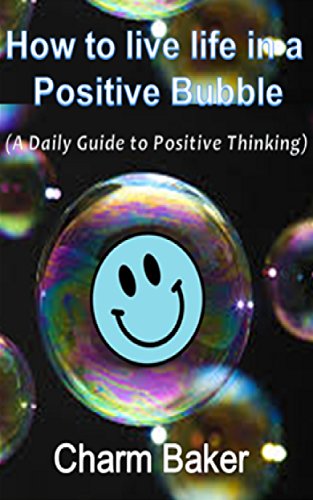
For me, journal writing eventually led to article writing and publishing non-fiction ebooks.  I’ve published books on a lot of useful topics (many of which I’ve made free on Amazon for the next week).  In the course of my writing, I began to notice an interesting fact.  The more I wrote about more personal things or topics close to my heart, the more rewarding it felt.  This gave me a liberating feeling.  For instance, the simple little ebook I wrote called:  How to Live Life in a Positive Bubble was so enjoyable to publish because so much of me went into the book.  I talked about issues and topics that were important to me and probably a lot of other everyday people. 

I realize now that although I wasn’t talking about my negative past or discussing such deep topics as abuse, I was still finding freedom in my writing.  Writing gave me a sense of emancipation.  I begin to understand that the more truthful I was in my writing, the freer I felt.  That is why it was so liberating for me to write and publish my latest novel:  Skipping Childhood:  A Novel (From Abused Foster Child to Adolescent Serial Killer).  So much of my own truth went into this book, and as a result, I was able to release a lot of buried hostility and negative emotions.  The result was true emancipation.

http://amzn.to/2giOLmx

Why Survival Strategies

Survival strategies are needed by anyone who has ever suffered some form of abuse and never admitted to it and never found healing.  The term “survival strategies” is just another way of saying ways to live with yourself.  No matter who the abuser was and how long the abuse lasted, just because you were able to move on doesn’t mean that you’re okay.  In fact, you may never be okay unless you find a healthy coping mechanism.  For thousands of survivors, that coping mechanism is writing.  At some point, adult abuse victims can find the freedom they seek by expressing themselves and their pain in their writing. 

If you’re intimidated by the idea of putting your deepest and darkest secrets down on paper (or a computer screen), why not start off simple.  First get used to writing thoughts and ideas that are not so dark or secret, just private thoughts.  Try hard not to censor yourself.  It’s not easy, but you have to get used to the idea of writing like no one will read what you write; and after all, no one has to.  The more you write, the easier this will get.  One thing you should NOT do and that’s go over what you wrote.  You should not allow yourself to get stuck on going over your words and editing your “freestyle” work.  The whole point of this type of therapeutic writing is to get it out, not to read it; not even to share it, but simply to get it out. 

There’s no better time than the present to start writing to emancipate yourself.  Don’t plan what you will say or think about it, just write.  Give yourself a minimum of days to write consistently, whether you feel like it or not.  Then be sure to stick to your word and WRITE!

Tuesday, December 13, 2016

Coming of Age Novel with a Dark Side

COMING OF AGE


A popular form of fiction are coming of age stories; oftentimes due to the similarities we all seem to share when growing up.  Some readers look for things they can relate to when reading about someone else’s upbringing.  But there are also readers who like getting a glimpse into someone’s life that was completely different from their own.  Typically, coming of age books focus more on the journey and the path of the main character as well as their successes and failures along the way.  But sometimes certain events in a character’s life will manage to overshadow their overall journey.  When this happens, you end up with a novel like Skipping Childhood:  A Novel (From Abused Foster Child to Adolescent Serial Killer).


A Dark Side
Skipping Childhood is an urban novel that can be classified into a number of different genres.  The book definitely qualifies as a coming of age story because it spans from the main character’s birth (Deandra Baxter), up until she becomes an adult.  But this particular coming of age story has a serious dark side.  Events begin to unfold with more and more momentum.  Once Deandra resorts to murder as a solution to handling her problems, the suspense starts to mount.  This element to the book makes the title worthy of qualifying in Amazon’s Kindle Store:  Mystery, Thriller & Suspense category.

Hopefully, these two categories won’t somehow end up canceling each other out.  The two categories may seem like an odd partnership, depending on what a person wants to read.  The same can be said about the topic of sexual and physical child abuse.  Such subject matter might be more expected in a coming of age story, but perhaps not so much with a thrilling suspense story.  Yet, despite not necessarily being what readers might typically expect, Skipping Childhood:  A Novel has:

  • All the ups and downs of a coming of age story
  • All the tears and pain of an abuse story
  • And all the excitement and anxiety of a suspense story


Pick up a copy today, and see for yourself what a surprisingly enjoyable blend this book is.


Monday, December 12, 2016

Survival Stories: The Truth in Fiction

ABUSE AND SURVIVAL


I wrote a recent post about children who kill and how most of the books in this category are actually works of non-fiction.  The sad reality is; when dealing with a subject such as abuse and survival, the same thing is true.  I found so many heart-wrenching (non-fiction) stories out there about children who were abused and had to learn how to survive.  Interesting enough, some of those book topics actually end up overlapping; that is to say, some of those books about children who kill are also about children who were abused. 


This is of special interest to me, having written a work of fiction about a child abuse victim who resorts to killing.  Skipping Childhood:  A Novel (From Abused Foster Child to Adolescent Serial Killer) has many of the very same elements that those non-fiction books have.  The reason for this is because Skipping Childhood is a true story of survival, even though many elements of the novel is fiction.  We have all discovered by now that it is not unusual to find truth in fiction, especially when it comes to survival stories. 

In the publishing industry, when a book is based on a true story, presumably, the events that take place are true.  My book has an overwhelming amount of content that is inspired by true events, which is not necessarily the same thing.  While I never knew any 12 year-olds who killed anyone, I’ve known many, if not all of the characters in my book.  I’ve known their lives and their struggles and their challenges, and many of them, I’ve experienced first-hand.  So as an author, I’m able to write about abuse and survival with a sense of credibility, even if I use my imagination when writing about murder.

Difficult to Write and Read
Clearly, some topics are much more difficult to write and even to read.  I came across two books yesterday that I wanted to mention.  Both are based on true stories about child abuse and survival.  No More Pain Kindle Edition is written by Paige Green.  This is one that I purchased and plan to read.  I’ll also be posting a review when I’m done.   

http://amzn.to/2huoRgA             http://amzn.to/2huve3C

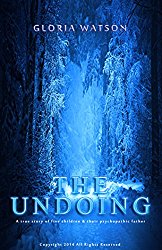
The other book I came across is The Undoing: The uncertain nights of the Peterson children Kindle Edition by Gloria Watson.  This one I won’t be reading, and I mean no disrespect to the author.  One of the statements made in the book description is that this book is “not for the faint of heart”.  That rules me out.  I found it hard to even read the description of what both books were about, let alone to dive into something I know will be disturbing. 

The reason I chose to buy No More Pain is because the author did a good job of making me feel saddened by the topic, but curious to see what happens.  I know the content is delicate, but I don’t get put off in the way the author leads me to believe it will be presented.  I think this is an important aspect when writing about child abuse and survival, whether you write fiction or non-fiction.  I appreciate the candor and foresight Ms. Watson (author of the second book) showed.  She gave us a warning about her book and certain readers need to recognize that her warning is for them (like me).  This helps eliminate the chance of reading a book and giving it a poor review because your conscious was offended or it was too graphic to handle.

Writers who are not sensitive to this issue can find themselves being viewed in a questionable way.  I came across one title about a sexually abused child, and the description almost read like one of the erotica books I’ve reviewed in the past.  There should be no blurred lines when it comes to writing about sexual child abuse and writing about an adult sexual encounter.  The language, tone, and everything else should be distinctively different.  Failing to recognize this fact will put off a lot of readers, as well it should.

Less is More
The expression “less is more” has never been more fitting than in the above conversation.  I think authors should apply it when writing the necessary scenes and dialogue in stories about abuse and survival (fiction or non-fiction).  Readers who want to read and understand these types of tragic stories don’t necessarily feel the need for all the gritty details and language surrounding violent and sexual acts.  I personally tried to keep this point in mind when I wrote Skipping Childhood.  The topic is sensitive enough without adding all the shock value of horrific scenes and dialogue.

I welcome you to read Skipping Childhood:  A Novel (From Abused Foster Child to Adolescent Serial Killer) and see what you think about this point.


Finding Fiction Stories About Children Who Kill

CHILDREN WHO KILL


In my search to find other authors who write about children who kill, I’ve found that most authors who write on this topic seem to be more interested in writing non-fiction.  As you can notice from some of the titles in the column, there were actually some pretty notorious children who kill.  With modern day shootings like Columbine and more, there is no shortage of factual events for those who prefer research to imagination.

 
Authors who do chose to write from a fictional perspective have managed to do a really good job of scaring the crap out of readers, when it comes to the child character’s sinister behavior. 

When I think of the sinister aspect of children who kill, I know my Deandra Baxter character pales in comparison.  There is absolutely nothing sinister about her, in spite of the various deaths that she’s responsible for.  I was beginning to worry that perhaps her character was a little too “normal”, until I saw an old Jodie Foster movie recently.  The movie is called “The Little Girl Who Lives Down the Lane”.   

This movie made me smile and feel good about my Skipping Childhood character again.  “Rynn” (the little girl in the movie) is another very good point of reference I can use whenever I discuss the Deandra character.  I’ve often referenced Rhoda Penmark (The Bad Seed), but I think Deandra is closer to being Rynn than she is to being Rhoda.  Have you seen either of these movies (they were both adapted from books).  You can do your own comparison.  Why not purchase a copy of Skipping Childhood:  A Novel (From Abused Foster Child to Adolescent Serial Killer) and see what you think.  

http://amzn.to/2giOLmx